

A heavy hail roof insurance claim can quickly become one of the most important financial matters a homeowner faces. One severe storm can leave behind thousands of dollars in roof damage, hidden structural problems, and difficult conversations with insurance companies. While many homeowners assume the claims process will be straightforward, the reality is often much more complicated. Understanding how hail damage affects roofing systems and how insurance claims are evaluated can significantly improve the outcome of your claim. Hailstorms arrive fast. The damage, however, often lingers for months or even years. What appears to be a few dents or missing granules may actually represent deeper problems that weaken the roof’s ability to protect the home. Consequently, homeowners who act quickly and document everything thoroughly often place themselves in a stronger position when negotiating with insurance carriers.
In areas throughout North Texas, severe weather is simply part of life. Residents of Duncanville regularly experience powerful storms capable of producing large hailstones, damaging winds, and significant property losses. Therefore, understanding the insurance process before a storm occurs can make a tremendous difference when damage eventually happens. Many policyholders focus primarily on repair costs. Yet the true challenge frequently involves proving the full extent of the damage. Insurance companies rely heavily on inspections, photographs, reports, and documentation. Without strong evidence, portions of a claim may be overlooked, undervalued, or disputed. This is where preparation becomes invaluable. Think of the process as The Smart Homeowner’s Playbook. The goal is not merely filing paperwork. Instead, it involves gathering evidence, understanding policy language, communicating effectively, and protecting your investment every step of the way.
Understanding Heavy Hail Roof Damage
Not all hailstorms are equal. Some storms produce pea-sized hail that causes minimal damage. Others generate hailstones large enough to crack shingles, dent metal surfaces, and compromise entire roofing systems.
The severity of damage often depends on several factors:
- Hail size
- Wind speed
- Roof age
- Roofing material
- Impact angle
- Storm duration
A hailstone traveling at high velocity carries enormous force. Even if visible damage appears limited, the impact can weaken roofing materials beneath the surface.
Consider the following comparison:
| Hail Size | Common Comparison | Potential Roof Impact |
| 0.25 inch | Pea | Minor cosmetic effects |
| 0.75 inch | Dime | Light granule displacement |
| 1 inch | Quarter | Noticeable shingle damage |
| 1.75 inch | Golf Ball | Significant roof impacts |
| 2.5+ inches | Tennis Ball | Severe structural damage |
Although size matters, wind can amplify damage dramatically. Consequently, smaller hail traveling at higher speeds may sometimes create more damage than larger hail falling straight downward.
How Heavy Hail Impacts Roofing Systems
Different roofing materials react differently to hail impacts. Therefore, understanding how your roof type responds can help identify potential issues after a storm.
Asphalt Shingle Roofs
Asphalt shingles remain one of the most common residential roofing materials in the United States.
When struck by heavy hail, shingles may experience:
- Granule loss
- Bruising
- Cracking
- Surface fractures
- Accelerated aging
Granules provide critical protection against ultraviolet exposure. Once removed, shingles often deteriorate more rapidly.
Metal Roofs
Metal roofing systems are known for durability. Nevertheless, heavy hail can still create problems.
Common issues include:
- Dents
- Surface distortions
- Paint damage
- Fastener stress
While some damage may appear cosmetic, significant impacts can affect long-term performance.
Tile Roofs
Tile roofing offers impressive longevity. However, hail impacts may crack individual tiles, creating pathways for water intrusion.
The challenge is that damage is not always immediately visible from the ground.
Wood Shake Roofs
Wood roofing materials can split, fracture, and weaken when struck repeatedly by large hailstones. Over time, these damaged areas become vulnerable to moisture penetration.
Visible Signs of Hail Damage
After a storm, homeowners often begin searching for obvious indicators of roof damage. Several signs deserve immediate attention.
Dented Gutters and Downspouts
Metal components frequently reveal storm intensity. If gutters show significant dents, there is a strong possibility that the roof experienced similar impacts.
Shingle Bruising
Bruising occurs when hail compresses the shingle surface without completely breaking it. These damaged areas may feel soft when touched and often deteriorate over time.
Missing Granules
Granule loss is among the most common indicators of hail damage.
Look for excessive granule accumulation in:
- Gutters
- Downspouts
- Splash blocks
- Ground areas surrounding the home
Cracked Roofing Materials
Cracks represent direct evidence of impact damage and should be documented immediately.
Damaged Roof Accessories
Inspect:
- Roof vents
- Flashing
- Skylights
- Chimney caps
- Ridge vents
These components frequently sustain damage during severe storms.
Hidden Damage That Homeowners Often Miss
One of the biggest challenges associated with a heavy hail roof insurance claim is hidden damage. Not all storm damage can be identified from a quick visual inspection. In fact, some of the most expensive problems remain concealed until much later. Underlayment damage often develops beneath apparently intact shingles. Water barriers may become compromised without any visible warning signs. Consequently, leaks sometimes emerge months after the original storm.
Structural weakening can also occur when repeated impacts stress roofing materials beyond their intended design limits. Furthermore, moisture infiltration frequently begins long before stains appear on ceilings or walls. This delayed damage creates a common insurance dispute. Homeowners may discover leaks months later, while insurance companies question whether the damage originated from the original hailstorm or a subsequent event. Proper documentation immediately following the storm helps address this issue.
Why Heavy Hail Damage Is More Serious Than It Appears
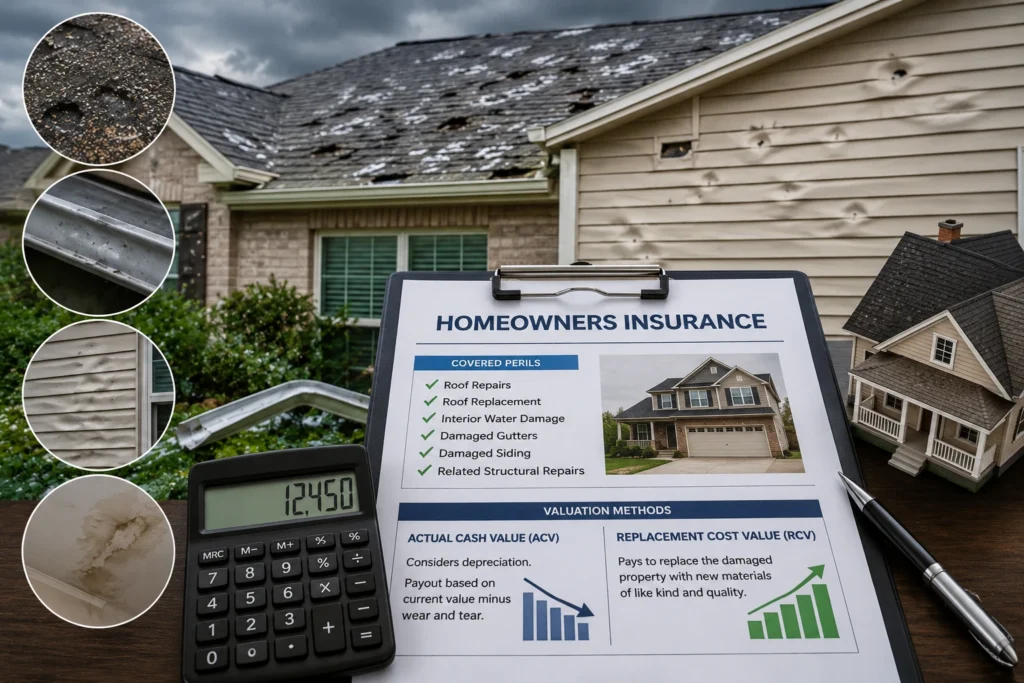
A roof serves as the first line of defense against the elements. When hail compromises that protection, the consequences can extend far beyond shingles. Initially, damage may appear minor. A few dents. Some displaced granules. Perhaps a cracked vent cover.
However, roofing systems function as integrated assemblies. Once one component becomes compromised, other components may become vulnerable as well. For example, damaged shingles allow increased ultraviolet exposure. That exposure accelerates aging. Aging leads to brittleness. Brittle materials become more susceptible to future storm damage. The cycle continues. As a result, even seemingly minor hail impacts can shorten a roof’s lifespan by several years.
Does Homeowners Insurance Cover Heavy Hail Damage?
In most cases, hail damage falls under covered perils within standard homeowners insurance policies. However, coverage details vary significantly. Many homeowners discover this only after filing a claim.
Typical policies may provide coverage for:
- Roof repairs
- Roof replacement
- Interior water damage
- Damaged gutters
- Damaged siding
- Related structural repairs
Nevertheless, coverage depends heavily on policy language. Insurance carriers evaluate numerous factors before approving payment.
These factors often include:
- Roof age
- Existing wear and tear
- Maintenance history
- Policy endorsements
- Deductible amounts
Consequently, understanding your policy before disaster strikes can prevent unpleasant surprises later.
Actual Cash Value Versus Replacement Cost
Few policy provisions impact settlement amounts more than valuation methods. Insurance companies commonly use one of two approaches.
Actual Cash Value (ACV)
Actual Cash Value considers depreciation. As roofs age, insurers reduce payment amounts based on estimated wear and expected lifespan.
For example:
A roof replacement costing $20,000 may receive significantly less compensation if depreciation is applied.
Replacement Cost Value (RCV)
Replacement Cost Value generally provides broader protection. Rather than focusing primarily on depreciation, this approach aims to restore the property using current replacement costs. Understanding which valuation method applies to your policy is critical before pursuing a heavy hail roof insurance claim.
What to Do Immediately After a Heavy Hailstorm
The hours immediately following a hailstorm often play a major role in claim success. Emotions run high. Homeowners worry about damage. Insurance companies prepare for increased claim volume. The key is remaining organized. Start with safety. Avoid climbing onto the roof. Instead, perform a ground-level inspection while documenting visible evidence.
Take photographs of:
- Roofing surfaces
- Gutters
- Siding
- Windows
- Outdoor equipment
- Vehicles
- Fencing
Capture wide-angle shots and close-up images. The more documentation available, the stronger your position becomes later. Next, record the storm details.
Include:
- Date
- Time
- Estimated hail size
- Duration
- Weather conditions
This information often becomes valuable during claim investigations.
Why Documentation Is So Important
Insurance claims rely on evidence. Without evidence, disputes become far more difficult to resolve.
Strong documentation may include:
- Photographs
- Videos
- Inspection reports
- Contractor assessments
- Repair estimates
- Weather records
- Correspondence with insurance representatives
Many successful claims share one common characteristic. They are thoroughly documented. Every photograph, report, email, and note contributes to the overall claim narrative. The objective is creating a clear timeline that demonstrates what occurred, when it occurred, and how the property was affected.
The Heavy Hail Roof Insurance Claim Process
Although individual claims vary, most follow a similar path. Understanding the process reduces uncertainty and helps homeowners make informed decisions.
Step 1: Schedule a Professional Inspection
Professional roofing inspections frequently identify damage that homeowners overlook.
An experienced inspector understands impact patterns, material failures, and hidden vulnerabilities.
Step 2: Review Your Insurance Policy
Before contacting the insurance carrier, review:
- Deductibles
- Coverage limits
- Exclusions
- Endorsements
- Claim deadlines
Knowledge creates leverage. The more familiar you are with your policy, the better prepared you become for claim discussions.
Step 3: Notify the Insurance Company
Prompt reporting is essential. Delays may create additional scrutiny regarding the cause and timing of the damage.
Step 4: Prepare Supporting Documentation
Organize photographs, inspection reports, and storm records before the adjuster visit. This preparation helps ensure important details are not overlooked.
Step 5: Meet With the Adjuster
The adjuster’s inspection plays a major role in determining claim outcomes. Therefore, thorough preparation is critical.
Reviewing the Insurance Estimate Carefully
Once the adjuster completes the inspection, the insurance company typically prepares an estimate outlining covered repairs and projected costs. Many homeowners immediately jump to the final dollar amount. That is a mistake. Instead, examine every line item. The estimate tells a story. It identifies what the insurer believes was damaged, how repairs should be performed, and what materials should be used.
Pay close attention to:
- Material quantities
- Labor charges
- Roof measurements
- Waste calculations
- Removal costs
- Accessory replacements
- Code-related upgrades
Even small omissions can create substantial financial gaps when repairs begin. Consequently, reviewing the estimate thoroughly can reveal opportunities for supplemental claims and additional compensation.
Common Reasons Heavy Hail Roof Insurance Claims Are Underpaid
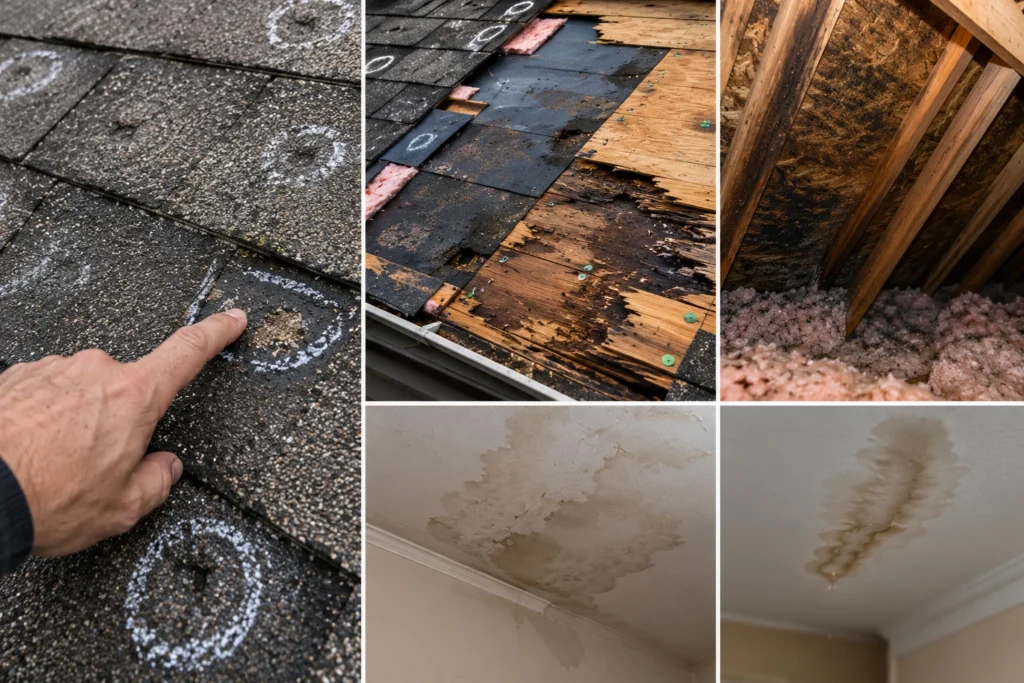
A heavy hail roof insurance claim may be underpaid for many reasons. In some situations, the issue stems from simple oversight. In others, disagreements arise regarding damage scope or repair methodology. One common issue involves missed damage. Adjusters often work under demanding schedules, especially following widespread storms. Large claim volumes can limit inspection time and increase the likelihood of overlooked issues.
Another challenge involves incomplete scopes of loss. A roof functions as a complete system. Therefore, replacing damaged shingles alone may not address related damage involving flashing, underlayment, ridge caps, vents, or drip edges. Measurement errors also occur.
An incorrect roof measurement can affect material quantities, labor requirements, and ultimately the settlement amount. Furthermore, code-related upgrades are frequently disputed. Local building requirements sometimes mandate upgrades when repairs exceed certain thresholds. If these costs are omitted, homeowners may face unexpected expenses during reconstruction.
How Insurance Adjusters Evaluate Hail Damage
Insurance adjusters rely on a combination of observations, documentation, and industry guidelines when assessing storm-related losses.
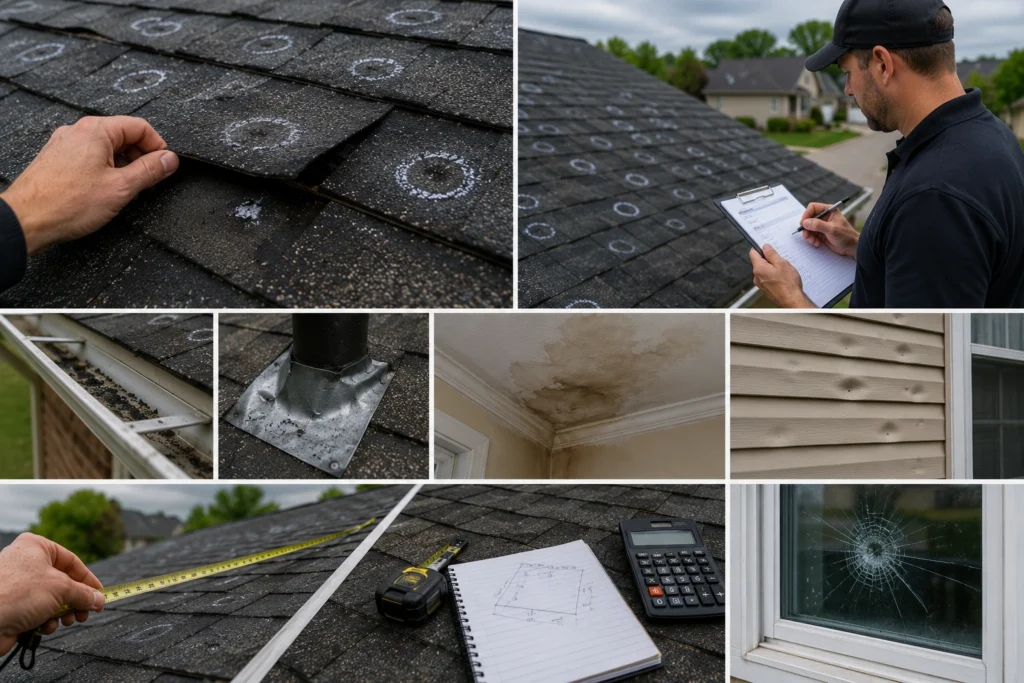
Their evaluation typically includes:
| Inspection Area | Purpose |
| Roof Surface | Identify impact damage |
| Gutters | Confirm storm severity |
| Flashing | Assess accessory damage |
| Interior Areas | Verify water intrusion |
| Siding | Document collateral damage |
| Windows | Identify impact evidence |
Adjusters also evaluate consistency. For example, random impact patterns often support hail damage findings. Conversely, uniform wear patterns may indicate age-related deterioration. This distinction becomes important because insurance policies generally cover sudden storm damage rather than normal aging. Therefore, presenting strong evidence helps establish a direct connection between the storm event and the resulting damage.
Why Multiple Inspections May Be Necessary
Not every claim is resolved after a single inspection. In fact, some of the largest settlements result from additional evaluations performed after hidden damage is discovered. Roofing contractors frequently uncover issues during material removal that were impossible to identify during the initial inspection.
Examples include:
- Damaged decking
- Compromised underlayment
- Hidden moisture intrusion
- Structural deterioration
- Improper prior repairs
When additional damage emerges, supplemental claims may become appropriate. These supplements allow homeowners to pursue compensation for newly discovered storm-related losses. As a result, keeping detailed records throughout the repair process remains extremely important.
Challenges Duncanville Homeowners Face After Major Hailstorms
Residents of Duncanville understand that North Texas weather can change rapidly. One afternoon may bring sunshine. A few hours later, golf-ball-sized hail may be falling across entire neighborhoods. Following major storm events, insurance carriers often receive thousands of claims within a relatively short period.
This surge creates several challenges:
- Delayed inspections
- Increased adjuster workloads
- Longer claim processing times
- Greater settlement disputes
- Contractor scheduling shortages
Additionally, evidence can disappear quickly. Damaged materials may deteriorate further. Temporary repairs may alter original conditions. Weather exposure may erase important indicators. Therefore, homeowners in Duncanville benefit from documenting damage as soon as conditions allow. The earlier evidence is collected, the stronger the claim often becomes.
When a Heavy Hail Roof Insurance Claim Is Denied
Claim denials are frustrating. However, they do not always represent the final decision. Insurance companies deny claims for various reasons.
Some of the most common include:
- Insufficient evidence
- Late reporting
- Maintenance concerns
- Policy exclusions
- Disputed cause of loss
When a denial occurs, start by reviewing the denial letter carefully. The explanation provided by the insurer often reveals the specific issues requiring attention. Next, gather additional documentation.
This may include:
- Independent inspections
- Engineering reports
- Contractor assessments
- Weather data
- Additional photographs
Strong supporting evidence can sometimes justify a reinspection request or formal appeal. Importantly, homeowners should avoid assuming a denial automatically means the damage is not covered. Instead, they should focus on understanding the insurer’s position and responding with facts.
The Value of Independent Roof Inspections
Independent inspections provide an objective assessment of storm damage. Unlike parties directly involved in claim decisions, independent professionals focus on identifying damage and documenting findings.
Their reports often include:
- Detailed photographs
- Damage mapping
- Measurement verification
- Repair recommendations
- Replacement recommendations
These reports can become powerful tools during claim negotiations. Furthermore, independent findings frequently identify issues that were not included in the original insurance estimate. The result may be a more complete understanding of the property’s true repair needs.
Understanding Complex Damage Patterns
Storm damage is not always straightforward. Interestingly, roofing failures sometimes involve a combination of impact damage, weather exposure, and material stress. This interaction can resemble principles studied in nonlinear systems, where small changes produce disproportionately large outcomes. While homeowners do not need advanced scientific training, understanding that seemingly minor impacts can trigger significant long-term consequences helps explain why professional inspections remain so valuable. Consequently, visible damage should never be the sole factor used to evaluate a roof’s condition after a severe hailstorm.
The Role of a Public Adjuster
Many homeowners encounter the term “public adjuster” only after experiencing a difficult claim. A public adjuster works on behalf of the policyholder rather than the insurance company. This distinction matters. While insurance company adjusters evaluate claims for the carrier, public adjusters focus on representing the interests of the insured property owner.
Their responsibilities may include:
- Claim documentation
- Policy review
- Damage assessment
- Settlement negotiations
- Supplemental claim preparation
For homeowners facing significant storm damage, professional representation can provide valuable support throughout the claims process.
Tips to Maximize Your Settlement
Successful claims often share several common characteristics. The homeowners involved remain proactive, organized, and informed. Consider the following strategies:
Report Damage Promptly
Early reporting establishes a clear timeline and reduces questions regarding when damage occurred.
Keep Detailed Records
Maintain organized files containing:
- Inspection reports
- Estimates
- Emails
- Photographs
- Claim notes
- Repair invoices
Save All Receipts
Temporary repairs, emergency mitigation efforts, and related expenses may become relevant during claim review.
Obtain Multiple Opinions
Independent inspections can identify damage that may otherwise go unnoticed.
Review Every Estimate Carefully
Never assume an estimate is automatically complete. Careful review often reveals omissions that warrant further discussion.
Understand Your Rights
Policyholders have rights under their insurance contracts. Understanding those rights helps create more productive claim discussions.
Mistakes Homeowners Should Avoid
Even strong claims can encounter problems when avoidable mistakes occur. Several errors appear repeatedly after major hail events.
Waiting Too Long
Time matters. Delays may weaken evidence and complicate investigations.
Discarding Damaged Materials
Preserving damaged materials may help support claim evaluations.
Making Permanent Repairs Too Early
Permanent repairs can eliminate important evidence before inspections occur. Temporary mitigation is often appropriate, but major reconstruction should generally wait until documentation is complete.
Relying Solely on Visual Observations
Some damage remains hidden. Professional evaluations frequently uncover issues invisible from ground level.
Accepting the First Settlement Without Review
Initial estimates sometimes require revisions. Reviewing documentation carefully helps ensure all damages are properly addressed.
Protecting Your Roof Against Future Hail Damage
Although no roof can completely eliminate storm risk, proactive measures can reduce vulnerability.
Property owners should consider:
- Annual roof inspections
- Prompt maintenance
- Proper attic ventilation
- Gutter maintenance
- Impact-resistant roofing materials
Preventative maintenance often extends roof life and improves overall performance during severe weather events. Additionally, maintaining thorough property records before storms occur can simplify future claims. Photographs taken before damage occurs create useful baseline documentation.
Why Preparation Matters More Than Most Homeowners Realize
Storms are unpredictable. Preparation is not. Homeowners who understand their policies, maintain accurate records, schedule regular inspections, and document damage thoroughly typically navigate the claims process more effectively. A heavy hail roof insurance claim is rarely just about shingles.
It often involves structural protection, financial recovery, property value preservation, and long-term peace of mind. Each decision made after the storm can influence the final outcome. Consequently, informed action frequently produces better results than reactive decision-making.
Final Thoughts
A heavy hail roof insurance claim can feel overwhelming at first. Nevertheless, homeowners who approach the process with preparation, documentation, and persistence often place themselves in a stronger position for success. From identifying hidden damage to reviewing estimates and negotiating fair compensation, every step matters. Furthermore, property owners in Duncanville and throughout North Texas benefit from understanding how severe hail events impact both roofing systems and insurance settlements.
The objective is not merely filing a claim. The objective is restoring the property properly, protecting your investment, and ensuring the settlement reflects the true extent of the storm damage. When homeowners stay organized, document thoroughly, and seek professional guidance when necessary, they create a much stronger foundation for achieving a fair outcome after a major hail event.
FAQs
Start by documenting visible damage with photos and videos, then schedule a professional roof inspection and notify your insurance company promptly.
A professional inspection can determine whether hail impacts have caused functional damage that may qualify for insurance coverage.
Most policies cover hail damage, but coverage can vary depending on policy terms, exclusions, roof age, and deductible requirements.
Claim deadlines vary by policy and state regulations, so homeowners should review their policy and report damage as soon as possible.
Yes. Hidden damage to shingles, underlayment, or flashing can allow water intrusion that may not become visible until much later.
You can request a reinspection, gather additional evidence, obtain independent inspections, and pursue the insurer’s appeal process.
Yes. An independent inspection can identify damage and provide documentation that helps support your claim.
Repair coverage addresses damaged sections, while replacement coverage may provide funds to replace larger portions or the entire roofing system when warranted.
A public adjuster represents the policyholder and can assist with documentation, claim preparation, and settlement negotiations.
Claims may be underpaid because of missed damage, incomplete estimates, measurement errors, depreciation disputes, or omitted repair items.