
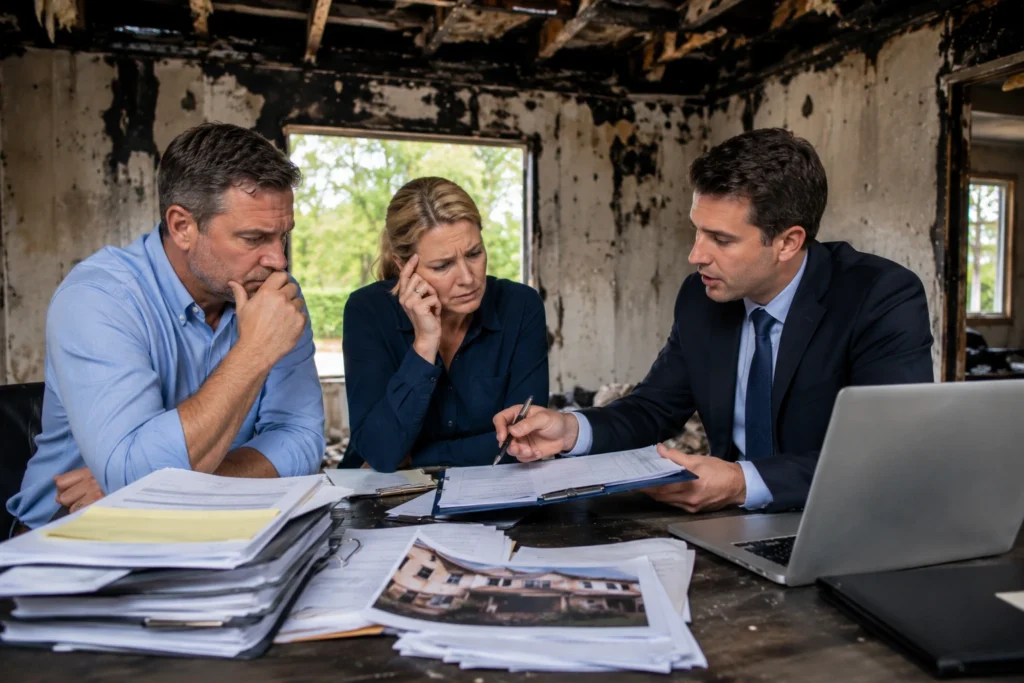
Understanding How Insurance Companies Undervalue Fire Claims is critical for homeowners and business owners who are trying to recover after a devastating loss. A fire can change everything in a matter of minutes. Homes become unlivable. Businesses shut down. Family possessions disappear. During such a difficult time, most policyholders expect their insurance company to provide the financial support promised under their policy. Unfortunately, the reality is often more complicated.
Many people assume that once a claim is approved, the insurance company will automatically pay the full amount needed to restore the property. In practice, that does not always happen. Settlement offers can fall short of actual repair costs, hidden damage may be overlooked, and important portions of a claim may be omitted entirely. The problem is not always outright denial. In many cases, the issue involves underpayment. A claim may be approved, yet the amount offered is insufficient to fully repair the damage. This creates financial strain at the very moment policyholders are trying to rebuild their lives.
Fire claims are among the largest and most complex insurance losses. Unlike a simple water leak or a broken window, fire damage often affects multiple systems simultaneously. Structural components, electrical systems, insulation, roofing materials, HVAC equipment, and personal belongings may all suffer damage from the same event. The challenge becomes even greater when smoke, soot, and water used during firefighting efforts create additional damage throughout the property. These secondary losses can be extensive and expensive, yet they are frequently underestimated during the claims process.
As a result, understanding how insurance companies evaluate fire losses can help policyholders identify potential gaps before accepting a settlement offer. In highly technical fields, experts often rely on advanced analytical concepts such as Bayesian Inference to assess probabilities and outcomes. While fire claim evaluations involve different methodologies, the principle remains similar: decisions are only as accurate as the information being considered. When important information is missing, settlement calculations can become flawed. The good news is that property owners are not powerless. By understanding common undervaluation tactics and recognizing warning signs early, policyholders can take meaningful steps toward protecting their financial recovery.
Understanding Fire Insurance Claims
Before examining how insurance companies undervalue fire claims, it helps to understand what a fire claim actually involves. A fire insurance claim is a request for compensation under an insurance policy following damage caused by fire, smoke, soot, heat, or firefighting activities. Depending on the policy, coverage may extend to structural repairs, personal property replacement, temporary housing costs, business interruption losses, debris removal, and additional expenses.
The process often begins immediately after emergency responders leave the scene. Property owners typically report the loss to their insurance carrier, which then assigns adjusters, investigators, consultants, engineers, or restoration specialists to evaluate the damage. What appears straightforward from the outside can become surprisingly complex behind the scenes. Several investigations frequently occur at the same time. The insurance company may evaluate the cause of the fire, determine whether coverage applies, inspect the extent of damage, review policy provisions, and estimate the cost of repairs. Each step influences the final settlement amount. Because so many moving parts exist, even minor mistakes can significantly affect compensation.
Consider the following categories commonly included in a fire loss:
| Damage Category | Potential Impact |
| Structural Damage | Repairs to walls, roofs, framing, foundations |
| Smoke Damage | Cleaning, deodorization, replacement |
| Water Damage | Drying, mitigation, mold prevention |
| Contents Loss | Furniture, electronics, clothing |
| Additional Living Expenses | Temporary housing and meals |
| Business Interruption | Lost revenue and operating costs |
When any one of these categories is undervalued, the total settlement may fall thousands or even tens of thousands of dollars short of actual recovery costs.
What Does It Mean When a Fire Claim Is Undervalued?
Many policyholders confuse coverage approval with full compensation. The two are not the same. A claim can be approved while still being significantly underpaid. This distinction is one of the most important concepts for property owners to understand. An undervalued claim occurs when the insurance company’s estimate fails to reflect the true cost of restoring the property to its pre-loss condition. The difference may stem from omitted repairs, inaccurate measurements, depreciation calculations, pricing disputes, or overlooked damage. In some situations, policyholders receive settlement offers that seem surprisingly low compared to contractor estimates. In others, repairs begin only to reveal hidden damage that was never included in the original scope of loss.
Several warning signs may indicate undervaluation:
- Repair estimates significantly lower than contractor bids
- Missing rooms or damaged areas in inspection reports
- Excessive depreciation deductions
- Failure to include code-required upgrades
- Disputes regarding smoke contamination
- Delays in claim resolution
- Incomplete contents inventories
Each of these issues can reduce settlement amounts and increase out-of-pocket costs for the policyholder.
Why Insurance Companies Sometimes Undervalue Fire Claims
Most people assume insurance companies intentionally search for ways to reduce payments. The truth is more nuanced. While insurance carriers have a legitimate responsibility to investigate claims and control costs, certain processes can inadvertently contribute to undervaluation. One major factor involves claim volume. Following large fires, regional disasters, or catastrophic events, adjusters often face overwhelming workloads. Under pressure to inspect numerous properties quickly, details can be missed.
Time limitations matter. A fire-damaged property may contain thousands of individual components requiring evaluation. Inspectors working under tight schedules may not have sufficient time to thoroughly assess every damaged area. Another factor involves estimating software. Most insurers rely on specialized pricing platforms that generate repair estimates based on predefined cost databases. These systems can be useful, but they are only as accurate as the information entered into them.
If damage is omitted from the scope, the estimate will also be incomplete. Human error remains another significant issue. Even experienced adjusters can overlook concealed damage, misunderstand construction methods, or fail to recognize contamination that extends beyond visibly burned materials. Complex claims increase the likelihood of these mistakes. This is particularly true when dealing with smoke migration, structural instability, or extensive water damage resulting from firefighting efforts.
Common Tactics Used to Undervalue Fire Claims
When discussing How Insurance Companies Undervalue Fire Claims, several recurring patterns appear across residential and commercial losses. One of the most common involves underestimating structural damage. Fire affects more than surfaces. Heat can weaken framing members, compromise load-bearing components, damage roof assemblies, and reduce structural integrity in ways that are not immediately visible. Some inspections focus primarily on areas with obvious burn damage while overlooking less visible structural concerns.
Smoke damage presents another challenge. Many people think smoke only affects areas near the fire itself. In reality, smoke can travel throughout an entire structure, entering attics, crawlspaces, duct systems, cabinets, and wall cavities. Even small fires can create extensive contamination. Cleaning visible soot is only part of the solution. Odor removal, HVAC decontamination, and material replacement may also be necessary. Another frequent issue involves water damage. Firefighters often use significant amounts of water to extinguish a blaze. While the fire may be contained, moisture can remain trapped behind walls, beneath flooring systems, and inside structural assemblies.
If not properly addressed, additional deterioration may occur long after the flames are extinguished. Depreciation is another area where disputes commonly arise. Insurance companies frequently reduce payments by applying depreciation to damaged items. While depreciation is appropriate under certain policy provisions, disagreements often occur regarding the amount applied and whether it accurately reflects actual condition. A roof nearing the end of its lifespan may warrant substantial depreciation. A well-maintained system with years of useful life remaining may not. The difference can dramatically affect settlement values.
The Difference Between Actual Cash Value and Replacement Cost
One of the biggest sources of confusion involves valuation methods. Many policyholders do not realize that their policy may calculate payments using different approaches. The two most common methods are Actual Cash Value (ACV) and Replacement Cost Value (RCV). Actual Cash Value considers depreciation. Replacement Cost focuses on what it would cost to replace the item today with a similar new item. The distinction is significant.
| Valuation Method | Typical Result |
| Actual Cash Value | Replacement cost minus depreciation |
| Replacement Cost | Full cost to replace with comparable materials |
Imagine a kitchen cabinet system damaged by fire. If replacement costs total $20,000 but the insurer applies substantial depreciation, the initial ACV payment might be considerably lower. Recovering the withheld amount may require additional documentation and completion of repairs. Many policyholders are surprised when they learn this after receiving their first settlement check. Understanding the valuation method used in your policy can help prevent unrealistic expectations and identify potential discrepancies during claim review.
Hidden Damage That Insurance Companies Often Miss
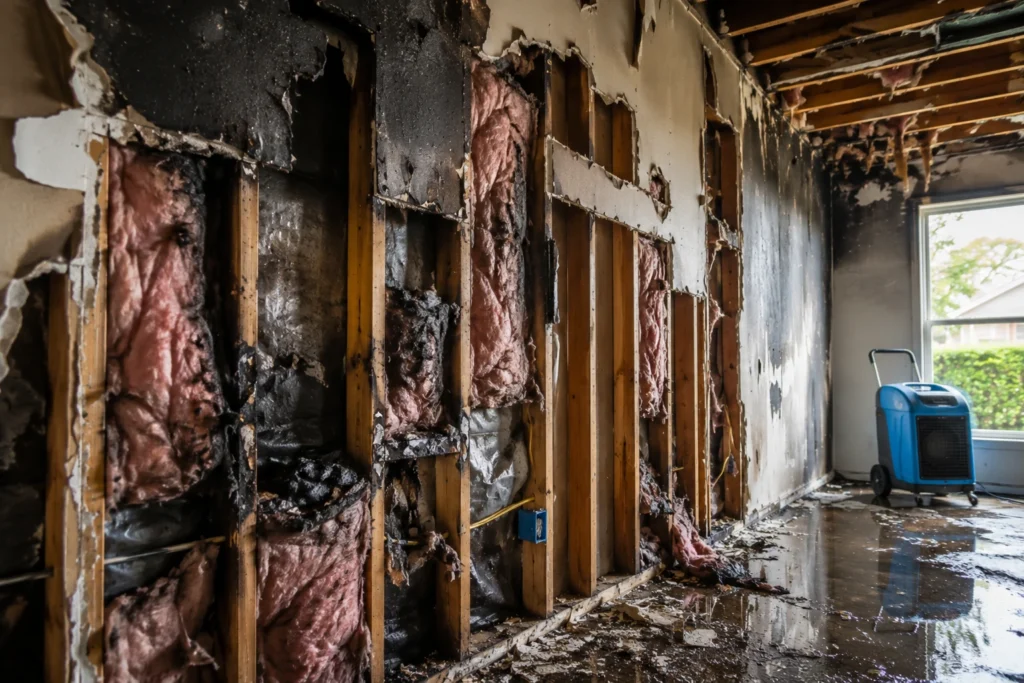
One of the most important reasons How Insurance Companies Undervalue Fire Claims remains a widespread issue is that much of the damage cannot be seen during an initial inspection. A fire scene tells only part of the story. Behind walls, above ceilings, and beneath floors, conditions may exist that are not immediately apparent. Structural framing can become weakened by heat exposure. Electrical wiring may suffer insulation damage. Insulation materials can absorb smoke and odor particles that continue affecting indoor air quality long after visible repairs appear complete.
Smoke migration is particularly deceptive. Even when a fire originates in a single room, smoke can travel throughout the structure through gaps, ductwork, plumbing penetrations, and ventilation pathways. As a result, contamination frequently extends far beyond the area where flames were visible. Water damage creates another layer of complexity. During firefighting operations, large volumes of water may saturate building materials. Moisture can become trapped inside wall cavities, beneath flooring systems, and around structural components. Without proper drying and remediation, long-term deterioration may develop. Many initial estimates focus on visible damage. However, hidden damage often represents some of the most expensive repairs within the entire claim.
How Fire Claim Investigations Affect Settlements
Insurance companies rarely rely on a single inspection when evaluating a significant fire loss. Instead, multiple investigations may occur simultaneously. The first typically involves determining the origin and cause of the fire. Investigators evaluate burn patterns, witness statements, physical evidence, and scene conditions to understand how the event occurred. At the same time, adjusters begin assessing the extent of damage. Engineers may also become involved if structural concerns exist. Their evaluations can influence decisions regarding repair versus replacement of major building components.
Contractors frequently play a crucial role as well. Independent repair estimates often identify damage categories that were omitted during initial insurance inspections. These estimates can reveal scope gaps that substantially affect settlement calculations. For commercial losses, accountants and forensic consultants may evaluate business interruption claims. Lost income calculations can become highly technical, particularly when seasonal fluctuations, future contracts, or operational disruptions are involved. The more complex the claim becomes, the more important comprehensive investigations become.
Documentation Problems That Lead to Underpayment
Strong documentation is often the difference between a fully developed claim and an underpaid one. Insurance companies rely heavily on evidence. If documentation is incomplete, important damages may never make it into the final settlement calculation. One common issue involves personal property inventories. After a fire, many homeowners struggle to remember every item that was damaged or destroyed. Unfortunately, forgotten items cannot be properly valued or included in the claim.
Photographs become extremely valuable in these situations. Family photos, social media images, holiday pictures, and home listing photographs may help establish ownership and condition of damaged contents. Another challenge involves contractor estimates. Not all estimates are created equally. Some focus only on obvious repairs while overlooking code requirements, hidden damage, specialty materials, or necessary demolition work.
Missing financial records can also impact commercial claims. Businesses pursuing lost income benefits often need tax returns, profit-and-loss statements, payroll records, contracts, invoices, and other supporting documentation. Without sufficient records, insurers may challenge the extent of financial losses. Communication records matter too. Keeping organized records of emails, letters, inspection reports, photographs, and claim conversations can become invaluable if disagreements arise later.
Fire Damage Categories Frequently Overlooked
Many policyholders assume the primary concern after a fire is repairing burned materials. In reality, several categories of damage are frequently underestimated or overlooked altogether.
These include:
- Smoke contamination throughout the structure
- Soot residue on surfaces and contents
- Water damage from firefighting activities
- Mold growth resulting from moisture intrusion
- Persistent odor contamination
- Electrical system damage
- HVAC system contamination
- Exterior property damage
- Landscaping damage
- Security and temporary protection costs
Each category carries potential financial implications. For example, smoke residue can permanently damage electronics, artwork, textiles, and personal belongings even when no visible burn damage exists. Similarly, odor contamination often requires specialized cleaning methods that exceed basic housekeeping efforts. When these categories are omitted from estimates, settlement amounts may fall far below actual restoration costs.
How Property Owners Can Protect Their Fire Claim
The best time to protect a fire claim is immediately after the loss occurs. Actions taken during the early stages of a claim often influence the final outcome. First, document everything. Take photographs and videos from multiple angles before cleanup begins whenever possible. Capture structural damage, contents damage, smoke staining, water intrusion, and debris conditions. Second, maintain a detailed inventory. Create room-by-room lists of damaged property. Include descriptions, approximate ages, purchase dates, brands, models, and replacement costs whenever available.
Third, save receipts. Expenses related to temporary housing, emergency repairs, meals, storage, debris removal, and other claim-related costs may qualify for reimbursement under applicable policy provisions. Fourth, obtain independent evaluations. Contractors, engineers, restoration specialists, and other experts may identify damages that were not included in the insurance company’s initial estimate. Finally, review the policy carefully. Many policyholders do not fully understand available coverages, limitations, endorsements, and exclusions until after a loss occurs. A detailed review can help identify benefits that might otherwise be overlooked.
When Professional Assistance Becomes Necessary
Not every fire claim requires outside representation. However, certain warning signs may indicate the need for professional assistance.
These signs include:
- Significant differences between repair estimates
- Repeated claim delays
- Unexplained payment reductions
- Extensive depreciation disputes
- Missing damage categories
- Large commercial losses
- Complex structural damage
- Contents valuation disagreements
When these issues arise, policyholders often seek help from experienced professionals who specialize in claim evaluation and negotiation. An experienced Fire Insurance Adjuster can review documentation, evaluate repair scopes, identify omissions, and assist in presenting a more complete picture of the loss. Professional representation does not create damage that does not exist. Rather, it helps ensure that legitimate damages are properly documented, evaluated, and considered during settlement discussions. For many property owners, that distinction can make a significant financial difference.
Fire Claims in Duncanville: Unique Local Considerations
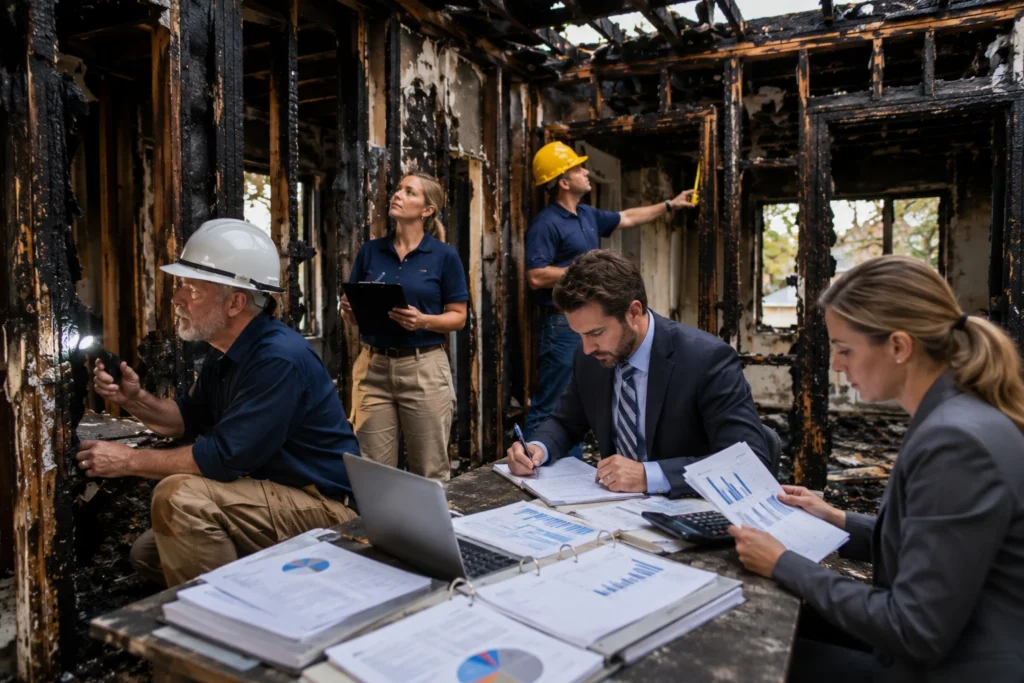
Property owners in Duncanville face many of the same claim challenges experienced throughout the country. However, local rebuilding conditions can influence settlement adequacy. Construction costs fluctuate over time. Labor shortages, material availability, permit requirements, and contractor demand may all affect the actual cost of restoration. As a result, estimates prepared months earlier may no longer reflect current market conditions. This is one reason why homeowners and business owners in Duncanville should carefully review settlement offers before accepting them.
A settlement that appears reasonable on paper may not accurately reflect real-world reconstruction expenses. Local building requirements may also affect repair costs. Code upgrades, safety improvements, and permitting requirements can create additional expenses that were not included in initial estimates. When overlooked, these costs often become out-of-pocket burdens for policyholders.
Why Large Fire Claims Often Experience Greater Undervaluation
Small claims certainly experience disputes. However, large fire losses frequently encounter more significant valuation disagreements. The reason is simple. Large losses involve more variables. A major residential fire may affect multiple floors, structural systems, roofing assemblies, mechanical equipment, contents, and temporary living expenses simultaneously. Commercial losses can become even more complicated.
Business interruption calculations alone may involve months of financial analysis. The larger the claim becomes, the greater the opportunity for overlooked damage, scope omissions, pricing disagreements, and valuation disputes. This does not necessarily indicate bad faith. Often, it reflects the complexity of evaluating extensive losses. Nevertheless, policyholders should recognize that complexity increases risk. Comprehensive documentation and independent review become increasingly valuable as claim size grows.
Understanding the Long-Term Impact of Underpaid Fire Claims
Many people focus only on the immediate settlement amount. However, the consequences of underpayment can continue long after a claim closes. Insufficient settlements may force property owners to postpone repairs, reduce project scope, use lower-quality materials, or absorb substantial out-of-pocket costs. Businesses may struggle to resume operations. Families may remain displaced longer than anticipated. Financial recovery may take years rather than months.
Furthermore, once repairs begin, additional damage is sometimes discovered. If the original claim was inadequately documented, obtaining supplemental payments can become more difficult. This is why careful claim development matters. Every omitted repair, overlooked damage category, or underestimated cost has the potential to affect recovery long after the fire itself has been extinguished.
Recognizing Common Red Flags During the Claims Process
Policyholders should remain alert for indicators that a claim may require closer scrutiny.
Common red flags include:
| Potential Warning Sign | Why It Matters |
| Extremely fast settlement offer | May not reflect full investigation |
| Large estimate differences | Potential scope omissions |
| Missing rooms or building areas | Damage may be overlooked |
| Excessive depreciation | May reduce payment unnecessarily |
| Repeated delays | Could indicate unresolved issues |
| Contractor disagreement | Scope review may be needed |
| Limited inspection time | Important damages may be missed |
A single red flag does not automatically mean undervaluation exists. However, multiple concerns occurring together often warrant further review. Property owners in Duncanville who encounter these situations should consider obtaining independent evaluations before finalizing their claims.
Conclusion
Understanding How Insurance Companies Undervalue Fire Claims can help property owners navigate one of the most challenging experiences they may ever face. Fire losses involve far more than visible burn damage. Smoke contamination, water intrusion, structural concerns, code requirements, contents losses, and business interruption impacts can dramatically affect recovery costs. When inspections are incomplete, damage is overlooked, or valuation methods reduce compensation, settlement offers may fail to reflect the true cost of restoration. By documenting losses thoroughly, obtaining independent assessments, reviewing policy provisions carefully, and seeking professional assistance when necessary, homeowners and business owners can better position themselves to pursue a fair and accurate recovery after a fire.
FAQs
Insurance companies typically use inspections, repair estimates, policy provisions, and valuation methods such as Actual Cash Value or Replacement Cost Value.
Insurance estimates may omit hidden damage, code upgrades, specialty materials, or other repair costs that contractors identify during detailed inspections.
Yes. Smoke can spread throughout a property and cause contamination, odor issues, and damage to personal belongings even when fire damage is limited.
Depreciation is the reduction in value based on age, wear, and condition of damaged property before the loss occurred.
Yes. Policyholders can provide additional documentation, obtain independent estimates, and negotiate for a more accurate settlement.
Hidden structural damage, smoke contamination, water damage, HVAC contamination, and code-required upgrades are frequently underestimated.
The timeline varies depending on the size and complexity of the loss, but larger fire claims often take several months or longer to resolve.
Photographs, videos, receipts, inventories, repair estimates, and communication records can all help support your claim.
Consider professional assistance if the claim involves significant damage, disputes over valuation, delays, or settlement offers that appear inadequate.
In many cases, yes. If additional damage is discovered during repairs, supplemental claims may be submitted with supporting documentation.